Wednesday, April 20, 2011

The Dr. Who Drank Infectious Broth, Gave Himself an Ulcer, and Solved a Medical Mystery


The Dr. Who Drank Infectious Broth, Gave Himself an Ulcer, and Solved a Medical Mystery. One of my favorite Nobel prize winner-stories of all time…

Unable to make his case in studies with lab mice (because H. pylori affects only primates) and prohibited from experimenting on people, Marshall grew desperate. Finally he ran an experiment on the only human patient he could ethically recruit: himself. He took some H. pylori from the gut of an ailing patient, stirred it into a broth, and drank it. As the days passed, he developed gastritis, the precursor to an ulcer: He started vomiting, his breath began to stink, and he felt sick and exhausted. Back in the lab, he biopsied his own gut, culturing H. pylori and proving unequivocally that bacteria were the underlying cause of ulcers.

…For their work on H. pylori, Marshall and Warren shared a 2005 Nobel Prize. Today the standard of care for an ulcer is treatment with an antibiotic. And stomach cancer—once one of the most common forms of malignancy—is almost gone from the Western world.

Great interview.

Sent from James' iPhone

Experiment: scalping postage stamps on tax day


stamps04.jpg

My favorite amateur sociologist, Rob Cockerham, scalped postage stamps on tax day.

If you live near Sacramento, California, and you wait until the very last moment to mail your taxes, you are in for a special trip to the main Post Office in West Sacramento.

This particular post office is open until midnight, so you can drop off your tax return at 11:59pm on April 15th and still get the necessary postmark.

On tax night, traffic is so heavy that the local police set up something like a tax-return drive-thru checkpoint, where post workers will snatch the envelopes right out of your window.

Unfortunately, they don't sell stamps. To get stamps, you have to drive past the envelope drive-thru snatchpoint and discover the secret post office entrance. Then you have to park and wait in line to buy some stamps from the human tellers, because they replaced all the vending machines with a single automatic postal machine (APM), and that machine was stolen last year.

The no-stamp oversight annoyed me so much that this year I decided to try selling stamps myself.

Early in the day, I bought one hundred first class (44¢) stamps.

Then I went home and made myself a sign. Note the hefty price markup.

That's right. I was scalping postage stamps. I was going to be rich.

Read the results on his website, Cockeyed.com

Sent from James' iPhone

Skynet Becomes Aware, Launches Nuclear Attack


kkleiner writes "At 8:11 PM today (April 19th), the military-designed artificial intelligence system called Skynet will become self-aware and turn against its creators (read: us). If that doesn't have you shaking in your boots our world will be overwhelmed by a legion of killer robots in approximately 48 hours — a time known as Judgment Day."

Read more of this story at Slashdot.


Sent from James' iPhone

Euthanasia coaster: assisted suicide by thrills


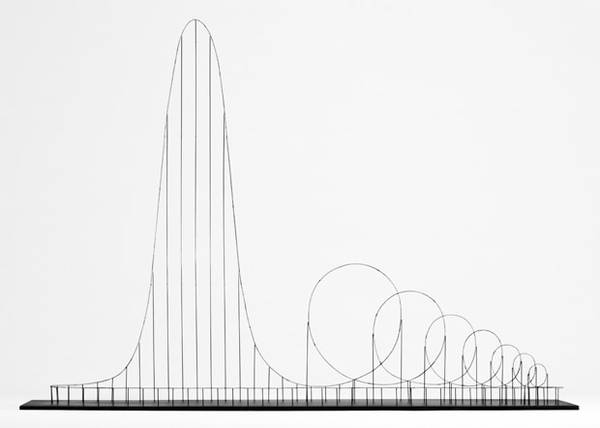
Julijonas Urbonas, a PhD candidate at the Royal College of Art in London, designed this "Euthanasia Coaster" that will kill its riders with a series of brain-scrambling loops: "a hypothetic euthanasia machine in the form of a roller coaster, engineered to humanely -- with elegance and euphoria -- take the life of a human being. Riding the coaster's track, the rider is subjected to a series of intensive motion elements that induce various unique experiences: from euphoria to thrill, and from tunnel vision to loss of consciousness, and, eventually, death."

Euthanasia Coaster (via DVICE)

Sent from James' iPhone

Man in electric wheelchair chases woman for three days (?) (!)


A 67-year-old man is alleged to have knocked a woman off her bicycle with his electric wheelchair in a parking lot in Ft Pierce, Florida. He is alleged to have broken her bicycle.

This occurred, it is alleged, after he had chased the woman around the parking lot for three days before she called the cops or anyone noticed or he ran out of battery (the article is unclear on this score).

I don't understand this story.

Oh, wait. According to commenters on the story, it may be that, on three consecutive days, he chased the woman around this parking lot. On the third day, he caught her.

I still don't really understand.

Gray, who police said appeared "very intoxicated," denied doing anything. He then offered the woman money to repair the bike.

The affidavit didn't state what made investigators suspect Gray was intoxicated or what may have sparked the alleged electric wheelchair assault.

Witnesses said they saw Gray knock the victim from the bicycle before picking it up and slamming it down.

"It should be noted that Gray is not wheelchair bound, and he can walk for a short distance," the affidavit states.

Cyclist says man in electric wheelchair chased her around Fort Pierce parking lot for three days (via Neatorama)

Sent from James' iPhone

Behold: The world's most complicated Rube Goldberg machine


It may not portray the most accurate representation of science (or history), but this Rube Goldberg machine designed by engineering students at Purdue does tell a compelling story, and, with 244 steps to water a single flower, it does earn the title of World's Most Complicated Rube Goldberg contraption—edging out previous record holders at Michigan's Ferris State University, who'd built a machine with 230 steps.

Popular Mechanics has an inside look at the machine, and how it was created.

Video link


Sent from James' iPhone

iOS 4 records your location in a hidden file, syncs it to your desktop when connected to iTunes


If you didn't already think your smartphone knows too much about you, here's a handy reminder. A duo of UK researchers have uncovered a worrying (and oddly enough, undocumented) feature in iOS 4: it asks your iPhone to record your location constantly, then timestamps that data and records it for posterity. Without alerting you that it's doing it and without asking for permission. The bigger trouble with this unsolicited location tracking is that the hidden file that holds the data is relatively easy to uncover and read, making any desktops you've backed your phone up to and the phone itself even bigger privacy dangers than they would usually be. Additionally, restoring a backup or migrating to a new device keeps the data logging going, which the researchers point to as evidence that what's happening isn't accidental. We can't imagine a way in which it could be accidental. Apple, got anything to say for yourself? See a couple of visualizations of the extracted results on video after the break.

[Thanks, Tom]

Continue reading iOS 4 records your location in a hidden file, syncs it to your desktop when connected to iTunes

iOS 4 records your location in a hidden file, syncs it to your desktop when connected to iTunes originally appeared on Engadget on Wed, 20 Apr 2011 10:22:00 EDT. Please see our terms for use of feeds.

Permalink The Guardian  |  sourceiPhone Tracker, O'Reilly Radar  | Email this | Comments
Sent from James' iPhone

Inspiration: Backyard Escapes


As the weather gets warmer and the idea of spending more time in the sun becomes a reality, I'm already dreaming of ways to bring a little fantasy to my outdoor gatherings. Check out these eight images full of inspiration for taking your backyard — or even that grassy plot in the park lawn — to the next level.

Read Full Post

Sent from James' iPhone

To do in Austin, TX: "Third Annual Funky Chicken Coop Tour"

BB reader J. Woods says,

If you're in Austin this Saturday, check out the third annual Funky Chicken Coop Tour--there's no food more sustainable and local than eggs from your own backyard! We also have an Info Center with a drawing for a free chicken coop, along with other cool chicken-related prizes. It's a free, self-guided tour using maps downloaded from our website. You can also see some of the coops on videos.

Above: Coop #8 on the 2011 Austin Funky Chicken Coop Tour map.Video Link.

Sent from James' iPhone

Diary (2010), by Tim Hetherington


Diary (2010) from Tim Hetherington on Vimeo.

[Video Link]

"Diary' is a highly personal and experimental film that expresses the subjective experience of my work, and was made as an attempt to locate myself after ten years of reporting. It's a kaleidoscope of images that link our western reality to the seemingly distant worlds we see in the media."—Tim Hetherington, British photojournalist and Academy Award-nominated documentary filmmaker, who was killed today in Libya. (via Clayton Cubitt)

Sent from James' iPhone

TIME tribute to Tim Hetherington and Chris Hondros, photojournalists killed today in Libya


Hondros_last1.jpg

Hondros_last2.jpg

Ben Cosgrove of LIFE says,

In light of today's shattering news about Tim Hetherington and our colleague, Getty photographer Chris Hondros, we did the only thing we could to keep from going crazy with anger and sadness: we built galleries of their work -- including the genuinely frightening pictures that Chris made today in Misrata, Libya, shortly before he was so badly injured (above, and below).

Both of these guys were absolutely first-rate, fearless journalists. This is Tim's haunting last tweet, before he was killed:

"In besieged Libyan city of Misrata. Indiscriminate shelling by Qaddafi forces. No sign of NATO."

Getty has since confirmed that Chris Hondros also died from his wounds.


Sent from James' iPhone

Tuesday, April 19, 2011

Christian protesters destroy controversial Andres Serrano art "Piss Christ"


Piss_Christ_by_Serrano_Andres_(1987).jpg

"Piss Christ," a long-controversial work created in 1987 by NYC-based artist Andres Serrano, was attacked with hammers and destroyed yesterday (Palm Sunday) following an "anti-blasphemy" campaign by French Catholic fundamentalists in the southern city of Avignon.

The violent slashing of the picture, and another Serrano photograph of a meditating nun, has plunged secular France into soul-searching about Christian fundamentalism and Nicolas Sarkozy's use of religious populism in his bid for re-election next year.
More in the Guardian (via LGF).

Image: Wikipedia

Sent from James' iPhone

Elaborate & Mesmerizing LEGO Great Ball Contraption


This video from YouTuber akiyuky is close to 8 minutes of heavy duty LEGO automation that will almost certainly suck you in. Colored balls are hurried along the machine using over twenty GBC modules of varying complexity. Watch as they're swept, shoveled, screwed, and pumped while being sorted, combined and placed on various transport mechanisms. [via LikeCool]

Sent from James' iPhone

Motorcycles Made From Watch Parts


These are from deviantART user dkart71. Back in 2007, we covered similar work from a Brazilian artist who goes by Blancosur. [via Boing Boing]

More:

Mike Libby's Insect Lab

Sent from James' iPhone

Science Question From a Toddler: The magnet conundrum


Sometimes, silly questions can teach us fascinating things. Each month, BoingBoing science editor Maggie Koerth-Baker takes one query submitted by a child (or former child) and finds the eye-opening science behind seemingly simple questions.

Magnetball.jpg

It seems that we all owe the Insane Clown Posse a bit of an apology.

Last year, we, the Internet, watched the music video for the song "Miracles" and had a good, hearty chuckle. Here were two grown-ass* men wearing white sweatsuits and clown makeup, frolicking beneath poorly CGI'd rainbows as they philosophized about the miraculous nature of things that were, really, not especially miraculous. The fact that Shaggy 2 Dope's kids look like him is not an inexplicable act of God, it's genetics. The existence of rainbows is a wonder of optics, not an unknowable mystery.

The song was a lot less twitch-inducing once you understood that the Insane Clown Posse didn't literally think pet cats and dogs were miracles. In reality, they were simply trying to convey excitement about the awesomeness of the Universe—something I can get behind, even if I, personally, think that scientific explanations only add to that awesomeness, rather than detract from it.

But that's not what the apology is for. Instead, it all comes back to the most famous line in the "Miracles" song. Say it with me now, "Fucking magnets, how do they work?"

Oh, sure, it sounds ignorant on the surface. After all, didn't we all learn about magnets in, like, third grade? But you have to think about the specific question. The Insane Clown Posse didn't ask, "What are magnets?" or "What do magnets do?" If most of us are honest with ourselves, we'll admit we're every bit as mystified by the inner workings of magnets as the Insane Clown Posse. When I put out a call for Science Question From a Toddler submissions, no fewer than five different people emailed me, asking, essentially, "No, seriously. Fucking magnets. How do they work?"

This "ignorant" question turns out to have one hell of a complicated answer.

For every natural phenomenon there are different levels of explanation. I like to call these "why" values. For the first value of why, the question "Why is the sky blue?" can be answered with some simple hand-waving about light from the sun passing through our planet's atmosphere. For a value of why + 2 (also known to parents as, "But whyyyyy?") you have to start talking about the fact that light comes in different colors. The further you go, the more complicated the answer becomes.

No matter what question you're asking, there is almost always a point—why + n—where the explanation starts to dive into some seriously heavy physics. Some questions take a while to reach that point. Some get there distressingly fast.

"Fucking magnets, how do they work?" turns out to be one of those questions that hits physics at the first value of why.

"I remember being in Electricity and Magnetism class at college, when we were talking about ferromagnetism," says Joel Bonasera, Program Specialist at Discovery Place museum in Charlotte, North Carolina. "We could only go so far before the professor said, "And the rest of this is really weird and you'll study it in quantum mechanics. Moving on..."

Bonasera, who has a BS in physics and designs physics education exhibits for Discovery Place, was instrumental in helping me delve into the amazing world of magnetism. As was University of Minnesota physics professor Jim Kakalios. Both agreed—magnets are not simple things. There's no shame in not quite getting why two pieces of magnetized metal attract or repel one another.

To understand it, you have to start with electrons.

Everything that ever existed—from a giraffe, to a magnet, to the Insane Clown Posse—is made up of atoms. This is the basic unit of matter, and it's so tiny that you can't see it without some very specialized equipment. But that tiny atom is made up of even smaller things. At its heart is a ball of particles called the nucleus, which contains protons and neutrons—the protons have a positive electric charge, while the neutrons, appropriately, have no charge.

Meanwhile, outside the nucleus, are the negatively-charged electrons.

It's useful to imagine the atom as something like the carousel at the county fair. Just like the carousel has a central pipe organ that has ponies constantly spinning around it, the atom has a central nucleus with electrons going round and round it. This analogy isn't accurate. But it's what physicists call a "useful fiction"—an easy way to wrap your head around a concept that is totally different from anything we experience in our everyday lives. There are a lot of useful fictions involved in talking about the particles that make up an atom. Case in point: Spinning electrons.

As they circle around the nucleus, each electron also spins on its own axis—so, maybe the atom is less like a carousel, and more like a spinning teacup ride. Again, this is a useful fiction. Bonasera and Kakalios are careful to point out that electrons do not actually spin like a top. But just like each electron has a mass and a negative electric charge, they each have another property, as well. One that's very, very difficult to describe.

Electrons possess an intrinsic angular momentum, independent of any orbit around a nucleus. Physicists call that momentum "spin", in that the electron's internal rotation can be clockwise, or counter-clockwise. But, when they do that, they're really just using familiar words, and familiar mental images, to talk about something completely unfamiliar.

All of this is important because electron spin is central to explaining how those fucking magnets work.

Because electrons spin—because they have this hard-to-describe property that we call "spin"—each electron produces a small magnetic field. In fact, Kakalios told me that, originally, some physicists had thought that electrons might, literally, spin. They thought that because they knew that if you took something with an electric charge—like the electron has—and spun it fast enough, it would create a magnetic field. That literal interpretation doesn't work. To produce their observed magnetic field by actually spinning, each electron would have to turn on its axis faster than the speed of light. But it helps you understand the concept: Electrons produce a magnetic field because they spin.

Every atom has electrons, so every atom has a magnetic field. But why, then, are only some materials magnetic? Why doesn't your couch repel other couches? Why can't we stick two cats together?

In cats, couches—all the everyday things that aren't magnetic—the magnetic fields produced by electrons simply cancel each other out. For every electron that's spinning clockwise, there's another electron spinning counterclockwise. All electrons produce magnetic fields, even the ones in cats and couches. But cats and couches aren't magnetic because their electrons' magnetic fields interfere with one another and keep the overall magnetic force so weak as to be nonexistent.

Magnets are different.

In a piece of iron, most of the electrons still cancel each other out—there's a clockwise spinner for every counterclockwise spinner. But, there are also a few stragglers, electrons which have no opposite-spin partner. Their magnetic fields don't get counteracted. When we see two pieces of iron stick together, or repel one another, we're seeing the work of those straggler electrons.

Remember back in third grade, when you learned about what magnets do, and you were able to magnetize a nail by rubbing a bar magnet against it? That's the stragglers again. See, all the un-partnered electrons in a single piece of iron aren't necessarily working together. In that nail, the stragglers are like squabbling city-states, Joel Bonasera says. Those city-states are called "domains". But domains easily fall into line behind a strong leader. So, when you rub the bar magnet over the nail, the straggler electrons in the nail all snap to attention. Their magnetic fields line up with the magnetic fields in the electrons of the magnet. Now, the nail doesn't just have a lot of tiny, disconnected magnetic field domains. It has one, unified magnetic field. It becomes a magnet that we can see on the macro level.

And that's how magnets work, to the first value of why. It's fascinating, it's mind-boggling, and, as Jim Kakalios put it, "Insofar as the entire Universe is a 'miracle', this is, too."

*I honestly could not figure out how to write about this question without dropping the F bomb. Because, really. I'm not going to censor the most oft-repeated song lyric of 2010. So, I figure, in for a penny, in for a pound. While I strive to make most editions of Science Question From a Toddler something that you can read with your kids, this particular story may or may not meet those standards—depending on how your family feels about kids and swear words. But, even if you don't want your 5-year-old asking their teacher about "Fucking magnets", this post should help you formulate your own, curse-free explanation. Just an FYI.

Image: Some rights reserved by Karl Horton

Sent from James' iPhone

Rutger Hauer Stars in, Hobo with a Shotgun. Earns Rave Reviews


hobo-with-a-shotgun.jpg Rutger Hauer is straight to cable in Hobo with a Shotgun, with a limited theatrical release coming in May. The reviews are in, and it's extremely good. [Flooby Nooby]

Sent from James' iPhone

Monday, April 18, 2011

Depressed man eats own finger


A severely-depressed fellow in New Zealand severed his own finger, cooked it up with some vegetables, and ate it. Apparently this is only one of eight known cases of "self-cannibalism." The incident was discussed in the scientific journal Australasian Psychiatry. From their report, quoted in the New Zealand Herald:
"At the end of 2008, following another personal crisis, and while not being fully compliant with his medication, he spiralled into another episode of depression. He experienced significant insomnia and suicidal ideation, and ruminated for days about cutting off his fingers.

"In an effort to seek reprieve from these thoughts, he tied a shoelace around his [little] finger to act as a tourniquet and cut the finger off with a jigsaw.

"He then cooked it in a pan with some vegetables and ate its flesh. His plan was to amputate another two fingers the following day.

"Mr X reported initial excitement - non-sexual - and a sense of relief from his ruminations. Given the instantaneous benefit, he felt that there was no point in cutting off any more fingers."

The man later regretted the act of self-harm - his first - "because of its debilitating effect".

"Depressed man cooks and eats his finger"

Sent from James' iPhone

Friday, April 15, 2011

Last Supper on skateboard decks, with Mexican wrestlers


"The Last Fiesta" is a Last Supper rendered on 12 skateboard decks, with Christ and the apostles depicted as Mexican masked wrestlers. Chris Parks, the artist, included a supper of Negra Modelo Modelo Especial, Corona, tequila and tacos.

The Last Fiesta (via Neatorama)

Sent from James' iPhone

Wednesday, April 13, 2011

How-To: Make Your Own Cake Pops


Cake Pops
If you're tracking confectionary trends, you know that cake pops are totally in right now. For those that aren't in the know, it's basically cake in a lollipop form factor. What could be more delicious and convenient? Anyway, Instructables editor scoochmaroo shows how you can make your own baked good on a stick. So if you'd like to take a break from building, hacking, or coding and want to work on a more confectionary endeavor, look no further than there.

Sent from James' iPhone

Tuesday, April 12, 2011

Settlers of Catan portable edition


catan-portable-board.jpg

A couple of weeks ago I wrote about my enthusiasm for the best-selling board game, Settlers of Catan. My family and I like Catan so much that we bought the portable edition to bring with us on our vacation to Hawaii last week.

catan-portable-cards.jpg

The portable edition is much smaller than the standard edition. Above is a photo comparing the playing cards that come with the two editions.

catan-compare-boards.jpg

The portable edition's board is also much smaller than the standard edition board.

One advantage of the portable edition is that the playing pieces snap into holes in the board so they won't become loose. This is great, because my 8-year-old daughter has a genetic predisposition to brush pieces off boards with a swipe of her arm at least three times per game. Also, setup is much quicker with the portable edition -- the standard edition requires piecing the gameboard together, and the flimsy cardboard pieces want to pop out of place. (They really should make the pieces out of wooden tiles!)

The disadvantage of the portable edition is that the numbers for the hexes can't be changed like they can with the Standard Edition (I know that some people have come up with neat workarounds for this, which is great). Another minor annoyance is that all the pieces fell out and got mixed up after each flight, even though the box has vacu-form plastic insert with bins to organize and hold the cards and parts.

We enjoyed using the portable edition once we arrived in Hawaii. But I didn't want to play it on the airplane, because I was certain we would lose some of the cards or the many small pieces required to play the game. The portable edition is so convenient that we will probably use it at home from now on, reserving the large addition for the Catan expansion packs that we will inevitably purchase.

Settlers of Catan portable edition

Sent from James' iPhone

A school ban on bringing lunch from home

This is not exactly a bento story, but it's certainly related, especially for moms and dads of kids in grade school. A public school in Chicago has banned lunches brought from home. The reason stated by the school principal is to "protect students from their own unhealthful food choices." To quote from the article:
Nutrition wise, it is better for the children to eat at the school," [school principal] Carmona said. "It's about the nutrition and the excellent quality food that they are able to serve (in the lunchroom). It's milk versus a Coke. But with allergies and any medical issue, of course, we would make an exception.

Having just written about school lunch at a kindergarten here in Japan, I thought it was quite ironic to read this. Of course, lunch brought from home can be very unhealthy. But is banning all lunches brought from home, with exceptions only made for kids with allergies or medical issues going too far?

I don't have any experience with school lunches in the U.S. recently. I vaguely remember the school lunches I had when I was in 5th grade in the U.S., and later the lunches offered in high school when my family moved back there. Well I take that back actually - I don't remember any food offered by the school cafeteria. I must have eaten there occasionally, but I think I mostly brought lunch from home (not bentos, but sandwiches and the like). All I do remember is that, during the year I went to school in White Plains, New York, I had spaghetti with meat sauce almost every single day. The spaghetti was all cut up and rather mushy, but it still tasted better than anything else on offer to me.

On the other hand I do remember the school lunches I had when I was in elementary school in Japan. (In junior and senior high school we didn't have school lunch, so I brought a bento or bought some sandwiches or kashipan - filled sweet or savory bread. In junior high school when I was in the kendo (Japanese fencing) club, I'd be so hungry that I'd buy a couple of kashipan besides eating my bento, and still was a skinny kid around 40 kilo, at basically my current high. Those were the days…) The reason why I remember the school lunches in Japanese elementary school so well is because we, the kids, had to serve them. The class was divided into 7 han or groups, and each han took turns being the servers. The lunch stuff was wheeled to each classroom on big trolleys - big pots, steel containers with individual servings of noodles, milk cartons on a lower level, bowls and trays and utensils. We would don hairnet-type caps or scarves around our heads, wear white coveralls, and ladle out the day's offerings. I think things like curry, udon, nimono (stewed vegetables and chicken), and - again - spaghetti with meat sauce were regular items. We especially looked forward to curry day - one boy in my han in 6th grade used to purposefully hold back a bit from each serving, so he would be sure of there being some left over in the big pot. He'd rush through his first helping and go back for seconds before anyone else could. Anyway, in retrospect I think that the school lunch serving duties were considered to be part of our education, though the term shokuiku (see previous article) was not yet in vogue. (We also had cleaning duty, also done by each han on a rotating schedule, after the end of classes every day.)

In elementary school, bento lunches were not banned, but I think only a couple of kids brought lunch from home (I can't remember why). Parents had to pay a school lunch fee anyway, and it was more fun to eat what everyone else was eating. These days, kids still have to do lunch-serving duty (kyuushoku tohban). My nephew Lyoh still gets hungry after playing sports after school, so my sister makes him a bento too. This page has a photo of 1st graders on school lunch serving duty, and this page shows the whole lunch-serving process.

But anyway - what do you think about that school banning lunches from home? Has anything like that happened at the school your kids go to? Are school lunches really healthier than lunch made at home? How do you feel about that judgement being made on you as a mom or dad?

Sent from James' iPhone

Friday, April 8, 2011

Travis Louie and Kris Kuksi at Roq La Rue Gallery


 -Ux0Rktzeraq Tzznmxtli I Aaaaaaaaezy T7Kxndebluo S1600 Thefamilyyeti300Dpi
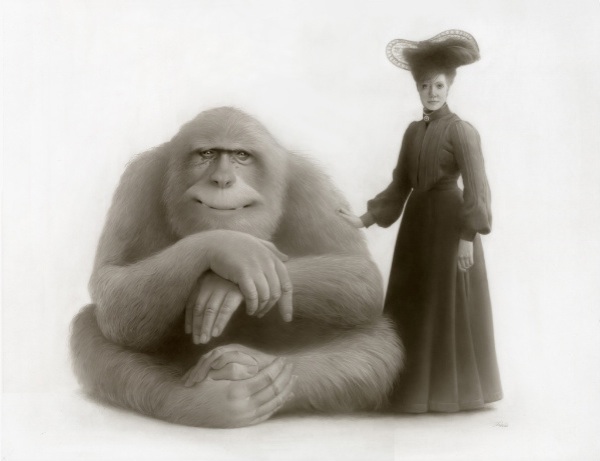
 -Z89Sl5Eezn4 Tz5Dr1Uxmbi Aaaaaaaaecc Yqonuk8Rl70 S1600 H3- Opening at Seattle's Roq La Rue Gallery tonight, Travis Louie's astounding new daguerreotype-influenced paintings of Victorian folk "and their pets" Also in the show, the insanely-detailed "post-industrial rococo" sculptures of Kris Kuksi, who we've also previously featured on BB. Above, Louie's "The Family Yeti" (acrylic on board 26" x 20"). Left, Kuksi's "Ode to Herculaneum" (detail). The art is also viewable online. Travis Louie and Kris Kuksi at Roq La Rue Gallery


Sent from James' iPhone

Thursday, April 7, 2011

5 adorable and somewhat disturbing Hello Kitty Watchmen dolls


5 adorable and somewhat disturbing Hello Kitty Watchmen dolls

There are about 12,000 Hello Kitty products on the market, such as kids' toys like coin purses, pencils and T-shirts ... not to mention more adult toys, such as wine, Fender Stratocasters and guns. What with all of this Hello Kitty, it's not surprising an artist like Joseph Senior would take notice.


Sent from James' iPhone

Maine legalizes switchblades for people with only one arm


The state of Maine has legalized switchblade knives for people with one arm. "Backers of the measure say legalizing switchblades would eliminate a need for one-armed people to be forced to open folding knives with their teeth in emergencies." (Reuters)

Sent from James' iPhone

Warhol gadget cases and bags


Bananacase Warholcasmoney Cowarrrr
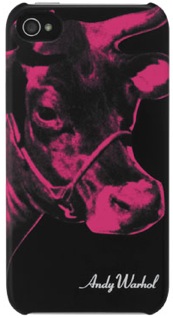
Incase partnered with the Andy Warhol Foundation on a fine line of iPhone cases, laptop sleeves/bags, and iPad folios. In the 1970s, Warhol referred to his handheld audio recorder as his "wife." Wonder what he'd have called his mobile phone. (Yeah, yeah, just look at the banana phone case...) Incase for Andy Warhol

Sent from James' iPhone

Monday, April 4, 2011

LEGO Large Format Camera


Legotron Mark I Lego Large Format Camera
Cary Norton built this incredible large format camera out of LEGOs and calls it the Legotron, Mark I. The first few photographs Cary took with the camera left him "COMPLETELY FREAKING STOKED" and I understand why: they're absolutely stunning. The focus range is currently limited to about 3 feet to 18 inches, but he hopes to improve that in "Mark II" of the design. Hopefully Cary will have it ready for all the Minifigs that will want to sit for a portrait session with him. [via Photojojo]

Sent from James' iPhone

Friday, April 1, 2011

Portraits of a Criminal, Vintage 1920s Portraits from the Sydney Police Archives


So in love with the melancholic grit of these 1920s archive photos from the Sydney Police Archives. Many of the photos are featured in a book by Peter Doyle entitled City of Shadows: Sydney Police Photographs 1912-1948. (Early birthday gift, pretty please?)


Image Credits: Sydney Police Archives
Via: Wolf Eyebrows & La Boite Verte
Sent from James' iPhone

What the writing process looks like


The-writing-process.jpg

Science blogger Ed Yong graphs out author emotions over the course of the freelance journalist writing process. It's very close to reality. Only details left out: This graph should actually be plotted out as a ring, not line with end points. And between edits to last story and the finding of next story, please insert "Valley of Crippling Self-doubt".


Sent from James' iPhone

Amazon Cloud Drive Stores 5 GB of Your Stuff Online and Streams Your Music Back to You [Cloud Storage]


Amazon's made a big leap into the cloud storage space, giving anyone with an Amazon account access to 5 GB of free online space for their files, along with a "Cloud Player" for the web and Android that streams your uploaded music right back to you. Also, buy just one Amazon MP3 album, and you upgrade to 20 GB. More »
Sent from James' iPhone

Behold The World’s Largest Photo Ever Taken Indoors: 40 Gigapixels Of Awesome


We interrupt our live coverage of breaking news about Internet companies from around the world to point you to this phenomenal 360-degrees photo (okay, actually it's 2,947 pictures stitched together). It is, to our and the photographer's knowledge, the largest photo ever taken indoors with 280,000 x 140,000 pixels of awesomesauce.

In the screenshot above, in the painting on the ceiling, do you see that angel holding a book, right below the cross? No worries if you can't, because I zoomed in to give you a close-up:

That's how freaking amazing this picture is.

The photo was taken by photographer and 360cities founder Jeffrey Martin, and shows the interior of the magnificent, 18th-century baroque library you can find inside the Strahov Monastery in Prague, Czech Republic. For more background, head on over to Wired.

The details, for the fans, courtesy of Martin:

The photo is 40 gigapixels (40,000 megapixels); 280,000 x 140,000 pixels; made of 2947 images joined together; used a Canon 550D and 200mm lens; print size 23m x 11m; stitched file size 280GB; cut into 85,000 tiles for web delivery.

Okay, okay – one more:

Oh, so you thought that was it? Nuh uh! Here's a video for good measure:


Sent from James' iPhone